


Private 5G for Data Center Security
EdgeNectar gives data centers their own private network that covers the whole site and runs on site. It stays separate from the data center’s production network and keeps working if the internet connection drops, keeping systems and security running at all times.
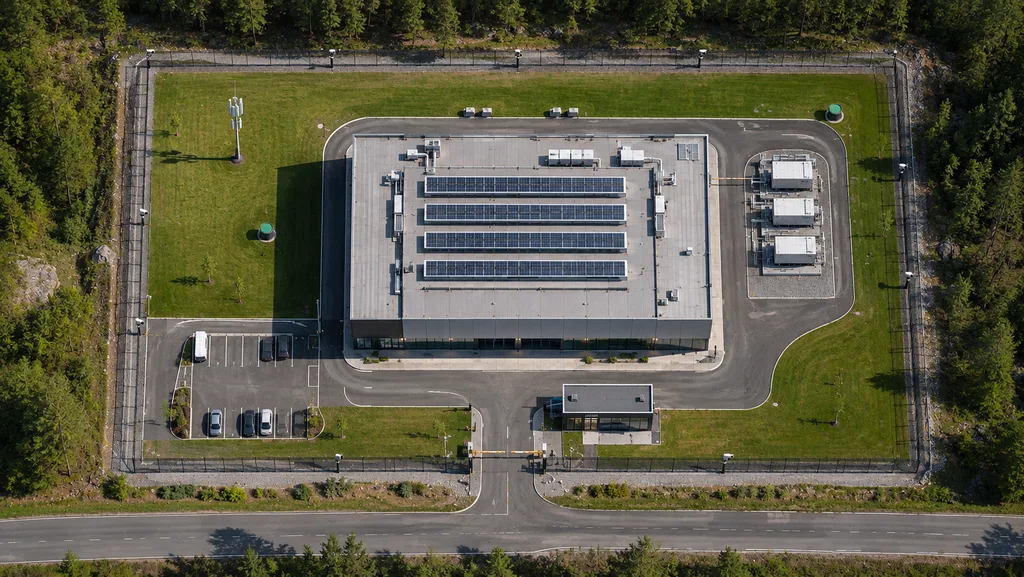
The use case in brief
- Challenge
- Data center security is organized in layers, from the perimeter to the server rack. Cameras, sensors, access control systems and guards are distributed across sites of up to several hundred acres, and all of them rely on a network that must be available at all times.
- Solution
- A dedicated private 5G network for the security operation. One outdoor unit provides coverage across the entire site, including indoor areas, with the 5G core located on site. If grid power or fiber is lost, the network switches to the data center’s backup power and a satellite link, and remains operational.
- Difference
- The network operates independently of the internet. Only devices with an authorized SIM card can connect, and all data remains on site.
- Impact
- Security monitoring of the entire site continues without interruption. Because the network operates itself, the data center’s own team can manage it without telecom specialists.
How EdgeNectar’s private 5G secures a data center
1Always on
Cameras, alarms and guard communication cannot pause, not even when the site’s internet connection goes down.
The network is connected to the data center’s backup power, the generators and UPS batteries that already keep critical systems running during an outage, and every network includes a Starlink satellite link as backup for the fiber. If the site loses both grid power and fiber, every camera, sensor and alarm stays connected.
Recordings and other security data stay on site, but the security system’s alerts always reach the people who need them. Alarms are sent to authorized staff, such as a remote security operations center (SOC) or on-call managers, over the fiber or, if it is cut, the satellite link.
2Kept apart
Security systems are kept on their own network, separate from the data center’s production and office networks, so a problem in one does not reach the other.
The network has its own 5G core on site, so video is recorded and alarms are handled locally. It connects to the production and office networks only where the data center decides.
3Coverage everywhere
AI data center sites can cover hundreds of acres and grow in phases over several years. Coverage has to reach from fence lines that run for miles into the buildings and data halls.
A single rugged outdoor unit, CompactOne, on a mast or rooftop, is enough to cover a site: the fence line, gates, generator yards and parking, and inside the building too. The 5G core is built into the unit. More units can be added as new buildings go up.
Every security device connects with a SIM card: fixed, pan-tilt-zoom and thermal cameras, fence and intrusion sensors, gate readers, guards’ handhelds and body cameras, and patrol robots or drones. Guards talk over push-to-talk on the same network.
4Under the data center’s control
Every device identified, data kept on site, and no access from outside without the data center’s approval.
Every device needs a SIM issued for this network. Device and network authenticate each other with keys stored on the SIM, traffic over the air is encrypted, and a lost device is blocked by switching off its SIM. The network can run fully on premises. EdgeNectar’s remote management service is used only to expand the network or add devices.
The network operates itself with AIDEN, the software EdgeNectar builds into every network. AIDEN runs on site and manages only the network: it watches signal quality, latency and device health and fixes routine issues on its own, work that normally requires telecom specialists. It has no access to the data center’s servers, production network or data, sends nothing to an outside AI service and keeps working without the internet. The network is delivered preconfigured and set up by the data center’s own team or an EdgeNectar partner. Read why the core’s location decides what happens when the link drops.
Where the security traffic goes
See private 5G secure a data center
This animated walkthrough shows the same kind of network: a single outdoor unit covering the site, local operation during an internet outage, and alerts over the Starlink backup link when power and fiber fail.

Video, 1:34. Pressing play loads the player from YouTube (privacy-enhanced mode). Chapters and full description.
Frequently asked questions
Why use private 5G for data center security?
A private 5G network covers a whole site, indoors and out, from a single unit, connects every camera, sensor and guard with a SIM card, and runs on site. With EdgeNectar it keeps working if the internet connection drops and stays separate from the data center’s production network.
How does private 5G compare with Wi-Fi or cabling for data center security?
Cabling and Wi-Fi remain common inside buildings. Private 5G covers the whole site, including the perimeter and grounds, from a single unit, is backed by the site’s backup power and a satellite link, and keeps the security systems on their own network, separate from production.
What happens to the security network if the data center loses power or internet?
It keeps running. The network is connected to the data center’s backup generators and UPS batteries, and the 5G core runs on site, so cameras, sensors, alarms, gate control and guard push-to-talk stay connected. If the fiber is cut, the Starlink backup link that comes with every network takes over, so alerts still reach authorized staff.
Is the security network separate from the data center’s own network?
Yes. It is its own private 5G network with its own core on site, separate from the production and office networks, and it connects to them only where the data center decides.
Does any security data leave the site?
Only if the data center chooses. Video, alarms and access events are handled on site, and recordings stay there. Alerts go to authorized staff, and anything else, such as remote viewing, leaves only if the data center allows it.
What is AIDEN, and what can it access?
AIDEN (Artificial Intelligence Delivery Edge Network) is the software that runs the private 5G network. It watches signal quality, latency and device health and fixes routine network problems, so the security team needs no telecom staff. It runs on site inside the data center’s firewall, works only with network measurements, and has no access to the data center’s servers, production network or data. The network is delivered preconfigured and set up by the data center’s own team or an EdgeNectar partner.
Can EdgeNectar secure data centers in remote locations?
Yes. The network depends on neither a carrier nor the internet. EdgeNectar has signed several contracts to provide video surveillance for AI data centers in remote locations.
Can the network secure a data center while it is being built?
Yes. Outdoor units can cover the construction site first, with cameras that move as the work moves, and the network grows with each new building until the data center is in operation.
Read more
Source: site size from StorageNewsletter: the AI data center campus in Childress, Texas, developed by Crusoe and Lancium, spans 270 acres.
Securing a data center?
Talk to EdgeNectar about your site, your security systems and how you want them kept apart.